The value of a high-end scientific instrument lies far beyond mere measurement capability.
In scientific research and industrial sites, such instruments determine data sources, the validity of research conclusions, and whether technologies can be translated out of laboratories.
In the past, the core mission of domestic scientific instrument manufacturers was to achieve availability from scratch, break through technical indicators and realize real-world deployment. Entering the kick-off year of the 15th Five-Year Plan, the scientific instrument industry faces more critical questions: Can equipment operate stably over the long term? Are measurement data reliable? Are application protocols mature and replicable? Can after-sales services sustain long-term demands of complex scenarios?
Competition in scientific instruments has shifted from isolated technical breakthroughs to comprehensive system capacity building. This is also a practical necessity for domestic high-end scientific instruments to strengthen independent controllability and underpin innovative development in key sectors.

A Dialogue on New Industrial Ecosystems
From June 1 to 3, the 2026 Scientific Instrument Developers Conference was held in Beijing. Co-initiated by the China Instrument and Control Society, academicians and experts in scientific instrumentation, and leading enterprises in the sector, the conference adopted the theme "Unite Efforts to Forge a New Industrial Ecosystem". It gathered competent government authorities, universities, research institutes, end-users, complete machine and component manufacturers, and industrial platforms.
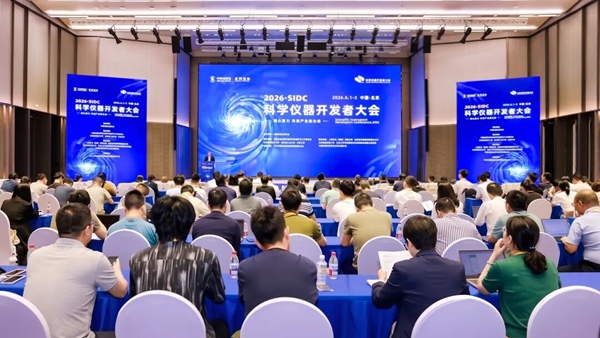
2026 Scientific Instrument Developers Conference Held in Beijing
The term "Developer" captures the core essence of this conference.
Transforming a scientific instrument from a prototype into a practical product tests not only technical specifications, but also engineering performance, reliability, application methodologies and service systems. What will ultimately define industrial competitiveness in the future is not simply developing a single instrument, but forming a full closed loop spanning technological innovation, engineering implementation, application verification and large-scale promotion. As one of the conference co-organizers, Focused Photonics (FPI) participated as a leading manufacturer of domestic high-end scientific instruments.
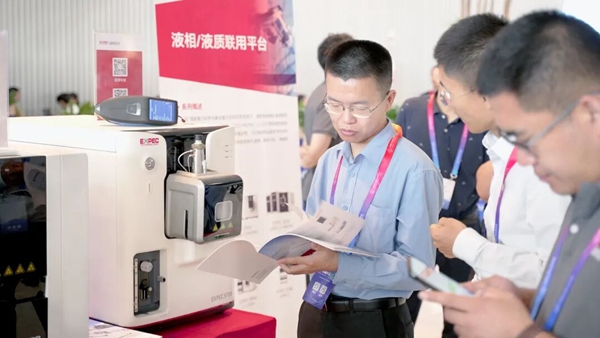
Visitors Stopped to Communicate at FPI’s Booth
During the conference, FPI showcased its core high-end scientific instruments and smart laboratory solutions, exchanging insights with attending experts, users and industrial partners on scenario-based applications, system integration and digital & intelligent capabilities.

Advancing from Availability to Excellence in the 15th Five-Year Plan Period
During the high-level dialogue session of the main forum, Han Shuanglai, General Manager of Focused Photonics, delivered a keynote speech themed "Opportunities and Challenges for Scientific Instrument Development During the 15th Five-Year Plan".
Han Shuanglai stated that after years of development, China’s scientific instrument industry has established a relatively complete product portfolio and industrial foundation. To evolve from "availability" to "excellence" in the 15th Five-Year Plan era, the industry must continuously push forward breakthroughs in mid-to-high-end instruments and core technologies, strengthen independent controllability, and improve product reliability and scenario adaptation capabilities.
He pointed out that the scientific instrument industry is facing multiple growth opportunities. In terms of policy, national guidelines for tackling core technical bottlenecks and advancing mid-to-high-end instrumentation have become clearer. In terms of application foundation, abundant domestic industrial scenarios provide practical grounds for iterative innovation of instruments. In terms of talent pool, the expanding professional workforce offers solid support for long-term industrial development.
Regarding the integration of AI and scientific instruments, Han Shuanglai proposed that instrument manufacturers should not only boost single-unit automation, but also extend automation to the entire system level. As AI penetrates research workflows, scientific innovation is trending toward full-process automation covering "Design-Build-Test-Learn", while unmanned dark laboratories are poised to upgrade to smarter, more advanced intelligent labs.
He added that to embrace this trend, instrument makers, AI tech firms, scientists and industrial organizations need to deepen cooperation on standardized hardware and software interfaces as well as collaborative data analysis capabilities, jointly exploring new development paths for scientific instrumentation.

Addressing Industrial Challenges Through On-site Application Practice
Real-world application is the ultimate testing ground for industrialization of high-end scientific instruments.
Moving an instrument from R&D prototype to practical deployment requires not only technical breakthroughs, but also rigorous validation and evaluation to build credibility in performance, data accuracy, testing protocols and after-sales services through real operational scenarios.
Having long specialized in high-end scientific instruments, Focused Photonics continuously integrates instrument performance with user workflows and industrial demands for complex application scenarios. Enabling stable instrument operation, consistent reliable data output, and replicable application capabilities across diverse scenarios is a critical question to be answered for the industrialization of high-end scientific instruments.
During the conference, PUYU Technology, an independently incubated subsidiary of Focused Photonics, took part in the cooperation signing ceremony for verification and evaluation programs hosted by the China Instrument and Control Society.
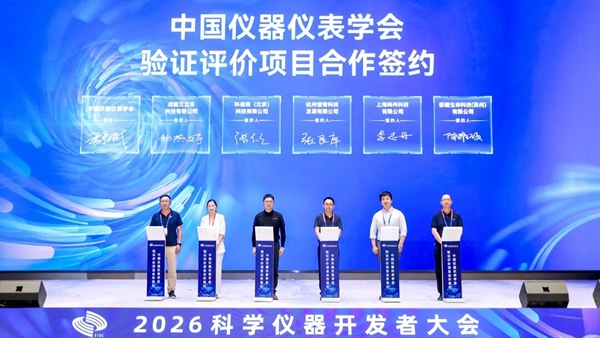
Signing Ceremony for Verification & Evaluation Cooperation with China Instrument and Control Society

Responding to Industrial Demands via Comprehensive System Capabilities
Focused Photonics keeps advancing the development of high-end instruments, intelligent software platforms, digital & intelligent solutions and full-lifecycle service systems, extending instrument functionality from standalone measurement to data interconnection, workflow coordination and intelligent management. Our pursuit goes beyond accurate measurement, delivering stable operation, seamless connectivity, unified management and responsive after-sales support.
The next stage of growth for the scientific instrument industry demands sustained technical research, long-term optimization tailored to real scenarios, improved product performance, and coordinated development across the entire industrial chain.
For the new development cycle ahead, Focused Photonics will stay rooted in technological innovation, real-world scenarios and long-term industrial value. Centered on boosting independent controllability of domestic high-end scientific instruments and meeting application demands in key sectors, we will collaborate with all industrial stakeholders to bring more scientific instruments from laboratories to field sites, shift from isolated technical breakthroughs to integrated system capabilities, and evolve from individual product innovation to shared ecological development.